Episode Title
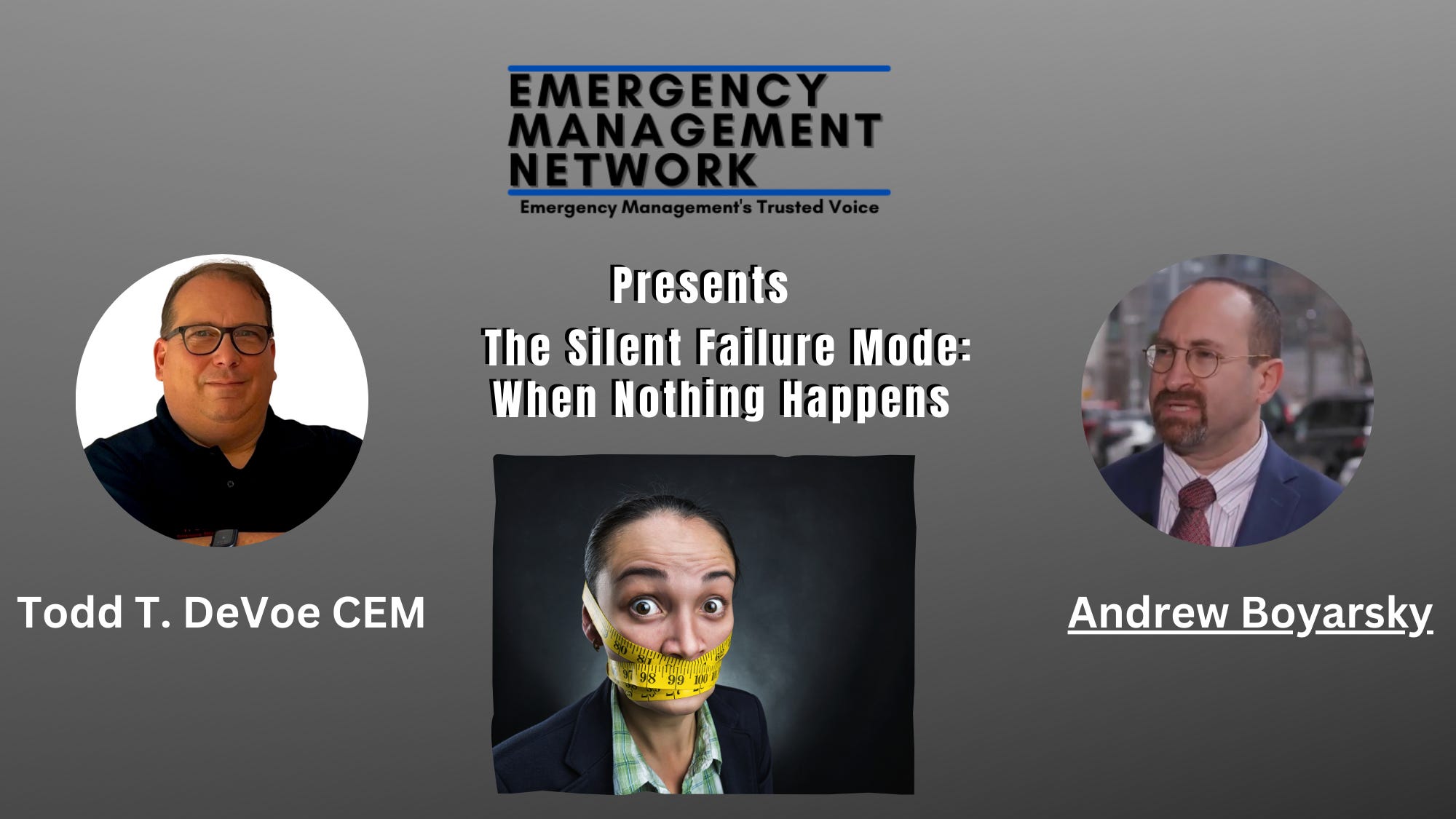
The Silent Failure Mode: When Nothing Happens
Episode Description
In emergency management, success is often defined by what doesn’t happen. No disasters. No major incidents. No headlines. And for a while, that quiet feels like validation.
But over time, silence can become dangerous.
In this episode, we explore the silent failure mode—the slow erosion of preparedness that occurs during long periods without crisis. When nothing happens, budgets shrink, plans gather dust, institutional memory fades, and readiness quietly degrades. The system does not fail loudly. It simply thins out.
This conversation is not about blaming leaders or chasing fear. It is about recognizing complacency as a structural risk and understanding why preparedness has a shelf life, even when everything appears calm.
If you have ever been told “we haven’t needed that in years,” this episode is for you.
What We Explore
• Why quiet years are often the most dangerous for emergency management programs
• How “no incidents” can be misread as proof that preparedness is unnecessary
• The political and organizational incentives that reward visibility over readiness
• Complacency as a hidden hazard inside stable systems
• Why preparedness degrades without friction, rehearsal, and institutional memory
• How emergency managers can reframe value when nothing is actively happening
Key Takeaways
Preparedness is not a permanent state.
Silence is not evidence of resilience.
Readiness requires maintenance, storytelling, and intentional friction.
The absence of crisis is not success—it is a test of discipline.
Who This Episode Is For
• Local and state emergency managers
• Public safety leaders navigating budget pressure
• Policy professionals and city managers
• Anyone responsible for readiness in quiet times
• Practitioners trying to explain the value of preparedness without a disaster