
From Sense-Making to Stewardship
Cynefin, Leadership Posture, and the Work Ahead (Part Two)

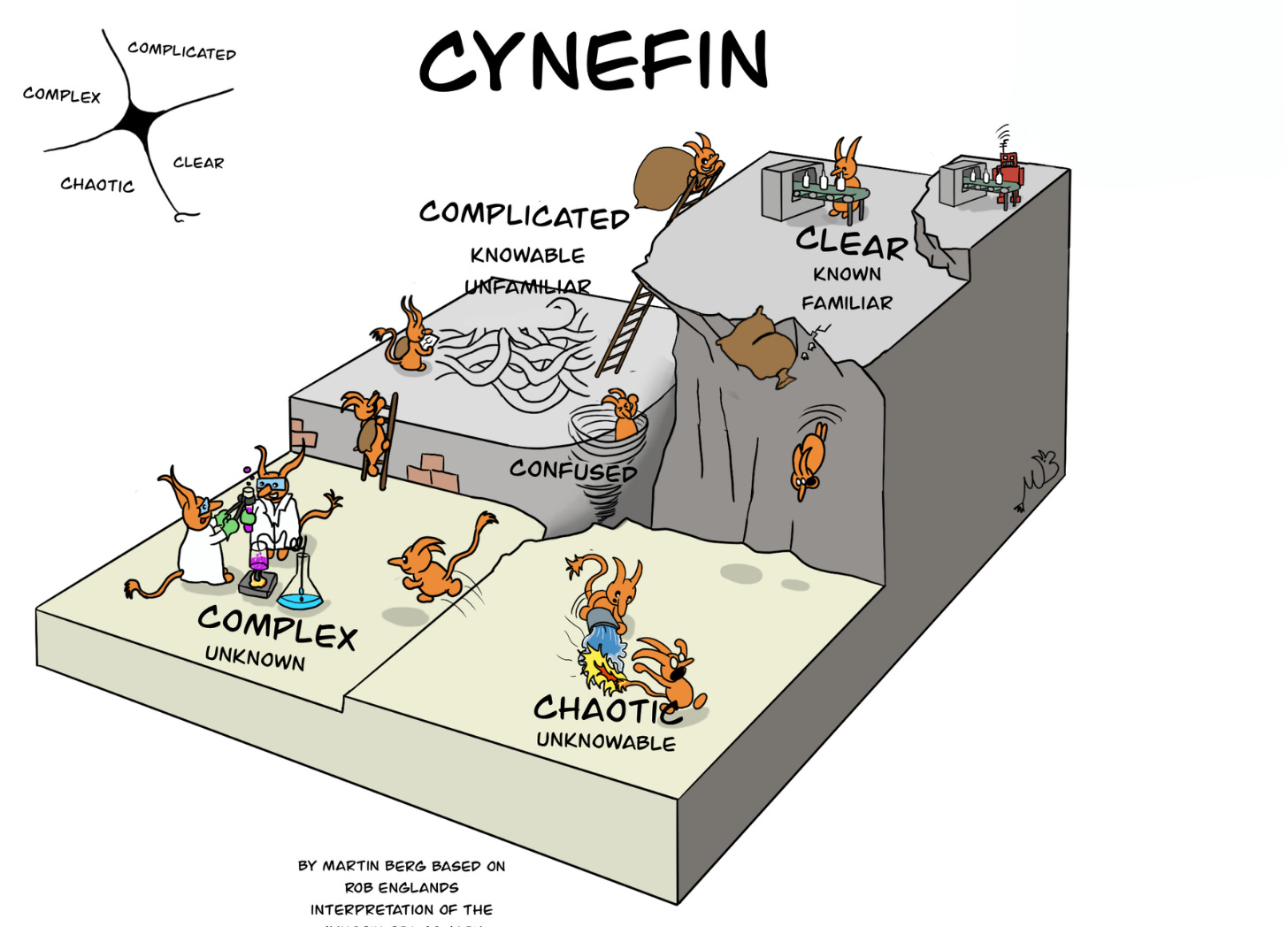
If Cynefin teaches us anything beyond categorization, it is responsibility. Not responsibility in the bureaucratic sense of task assignment or statutory duty, but responsibility for how we think before we act. In emergency management, the most consequential failures rarely come from a lack of effort. They come from misplaced confidence, from treating uncertainty as a flaw to be eliminated rather than a condition to be managed.
The danger is not complexity itself. The danger is mistaking complexity for something simpler than it is.
Too often, emergency management organizations are structurally optimized for the simple and the complicated domains. Plans, checklists, doctrine, and credentialing all reinforce the idea that if we just refine procedures enough, uncertainty will yield. This works—until it doesn’t. When systems behave nonlinearly, when public trust fractures, when infrastructure failures cascade, or when political narratives begin shaping behavior faster than facts, procedural excellence alone becomes insufficient. In these moments, competence without curiosity becomes brittle.
