
Emergency Management and the Problem of Soft Authority

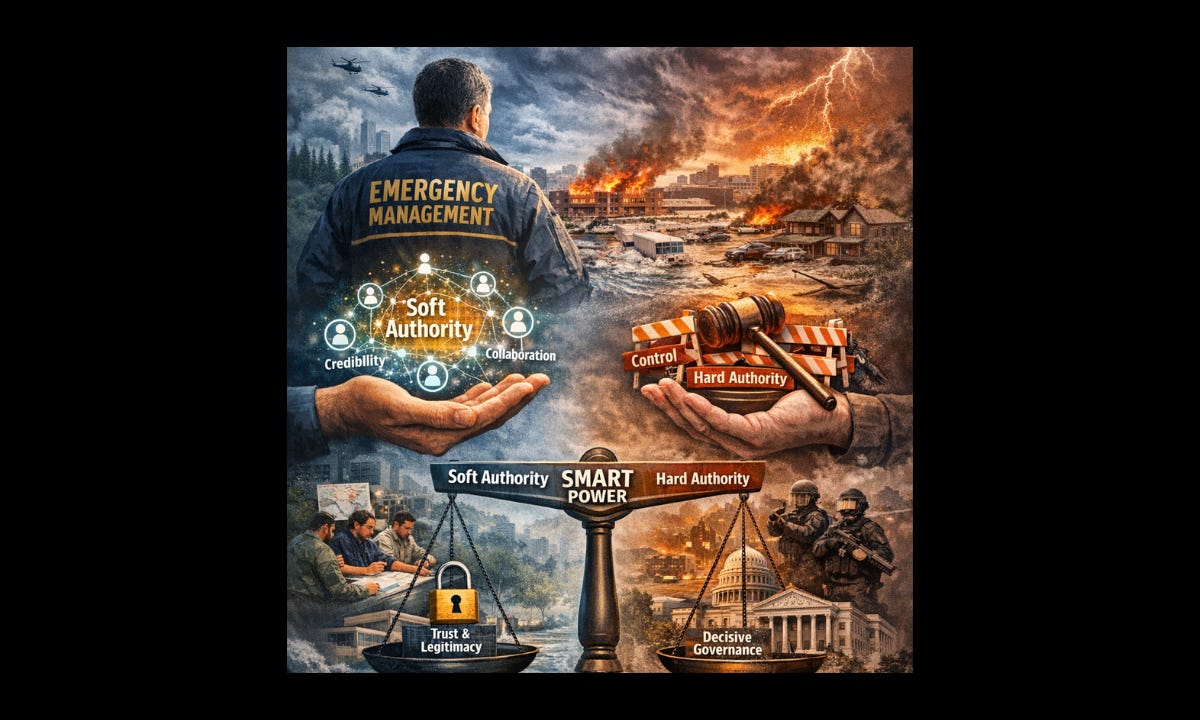
Emergency management operates in a space where authority is real, but rarely absolute. We do not command armies. We do not write laws. We do not control budgets at scale. Yet when disasters strike, communities turn to us to coordinate, align, persuade, and guide action across systems we do not directly control. This is the profession's paradox. Emergency management is built almost entirely on soft authority.
In international relations, this would be called soft power. It is the ability to influence behavior not through force or payment, but through attraction, credibility, and persuasion. It stands in contrast to hard power, which relies on coercion, incentives, or command structures. (Foreign Policy Research Institute) The emergency manager lives in this same domain. We convene rather than command. We coordinate rather than control. We rely on relationships, trust, legitimacy, and professional credibility to shape outcomes.
