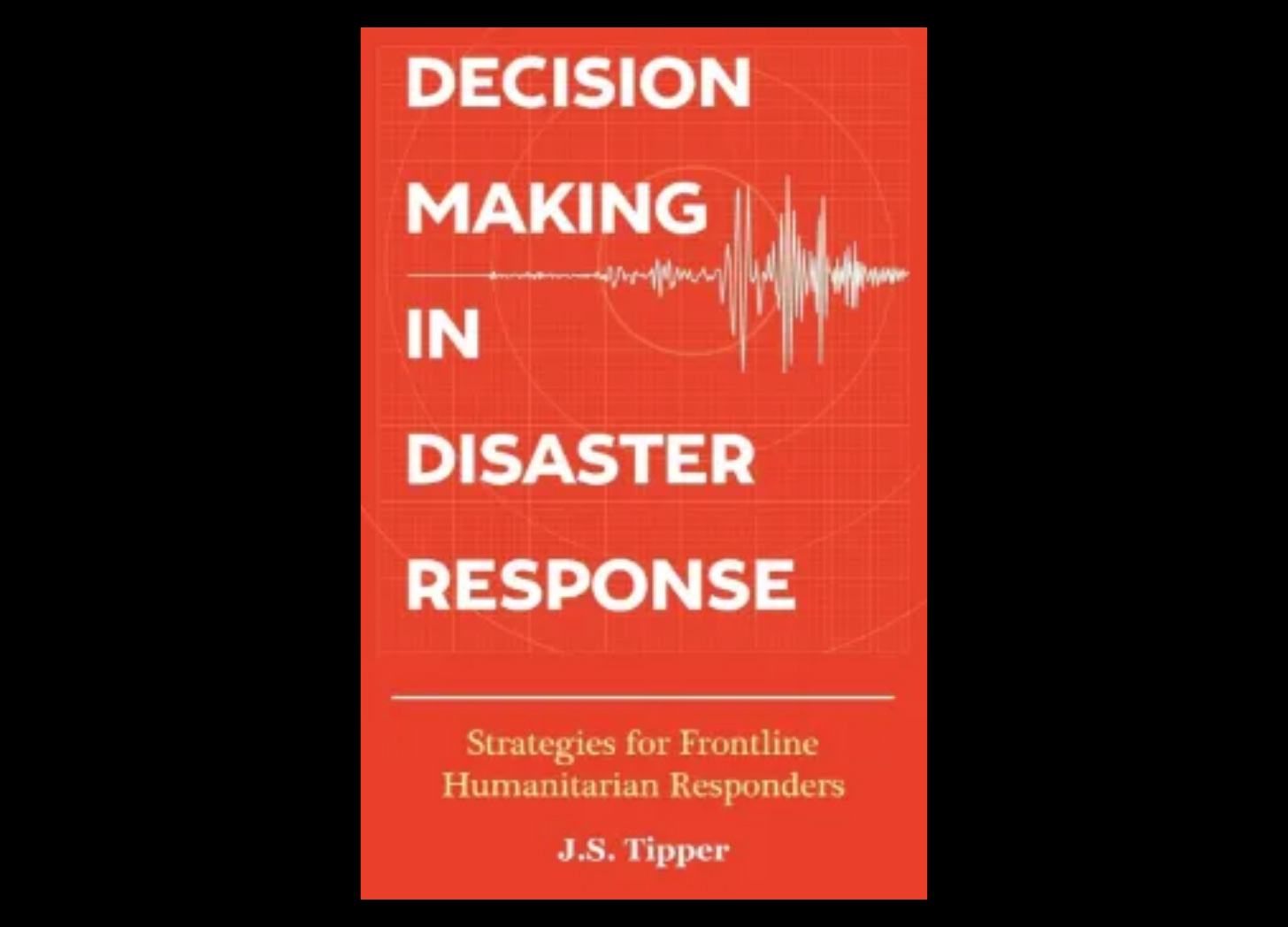
This book is a practical, immersive guide for those who must make high-stakes choices in uncertain conditions and with limited time. Drawing from humanitarian operations and frontline dilemmas, Tipper explores the tension between structured decision-making models and the instinctive judgments forged through experience. For emergency managers, the lessons are both sobering and empowering.
Disasters rarely present perfect information. Tipper emphasizes that effective leaders must shift between classical decision-making (structured, analytical) and naturalistic decision-making (rapid, experience-driven). Knowing when to slow down for analysis and when to act on instinct is critical to the success of a response.
The book highlights that experience alone is not enough; it must be paired with reflection. Through debriefs, scenario drills, mentoring, and after-action reviews, emergency managers can transform field lessons into sharper instincts for future crises.
Frontline dilemmas often involve no perfect solution. Whether negotiating with armed groups, prioritizing limited resources, or balancing safety with mission, Tipper underscores the importance of naming trade-offs openly and preparing to own the consequences.
By training to operate in ambiguous, fluid environments, emergency managers can sharpen their ability to detect subtle changes, anticipate cascading effects, and act decisively when conditions deteriorate.
This book does not sugarcoat the challenges of crisis leadership. Instead, it offers a clear-eyed look at the realities of emergency decision-making while equipping managers with tools to become more adaptable, ethical, and effective under pressure.